

TRUE PNS™ SYSTEM
One small injection. Designed for up to two years of stimulation.
The Injectrode® lead is placed through a needle and sits fully beneath the skin. The pulse generator is worn on the surface, and the lead is designed to be removed whenever chosen, within two years.
CAUTION: INVESTIGATIONAL DEVICE. LIMITED BY FEDERAL (OR UNITED STATES) LAW TO INVESTIGATIONAL USE ONLY. NOT FOR SALE.
TRANSCUTANEOUSLY POWERED
Electronics are kept outside the body.
Every nerve stimulation system has to get power to the lead. Most do it one of two ways. Either a lead crosses the skin and stays there for a short treatment, or a generator is implanted in a pocket beneath the skin for a long treatment.
True PNS keeps the lead inside and the power outside. The lead is fully implanted, the generator is worn on the skin above it, and the signal passes between them with nothing crossing the skin.
THE SIGNAL PATH
The external pulse generator provides the stimulation signal from outside the body, and the implanted Injectrode lead guides that signal to the peripheral nerve. When the signal reaches the nerve, it is intended to change how the nervous system interprets pain signals, with the aim of reducing pain perception.
From the patch, through the skin, to the nerve.
ELEGANCE BY SIMPLIFICATION
Six things this system does not have.
No incision at placement
Placement of the Injectrode lead is through an 18-gauge needle.
No connector
The signal passes through skin to the subcutaneous collector.
No sutures
Intended closure is a skin closure strip.
No implanted battery
The pulse generator is worn on the surface.
No exit site
Nothing remains through the skin at the therapy site.
No implanted generator
There is no generator inside the body or pocket incision made.
WHAT'S VISIBLE OUTSIDE THE BODY
The pulse generator attaches magnetically to a patch electrode worn on the skin above the implant, and the patient applies it on a schedule set with their clinician. Programming is handled through a remote.
Both worn components come off between sessions. There is no generator pocket contouring the skin and no dressing to maintain. Every visible part of this system is a part the patient can take off, and when it is off, the skin over the leads is unmarked.
Worn during therapy. Off between sessions.
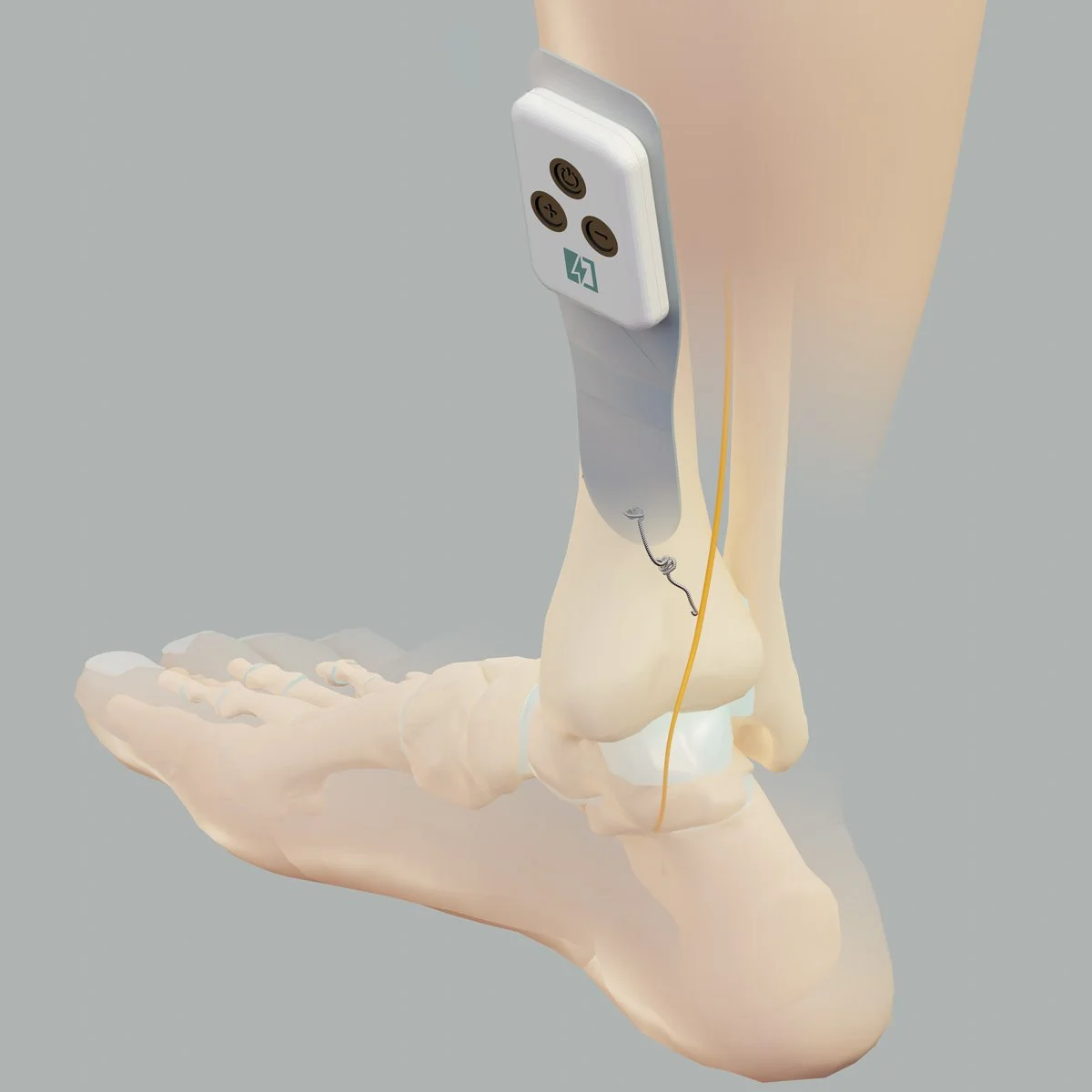
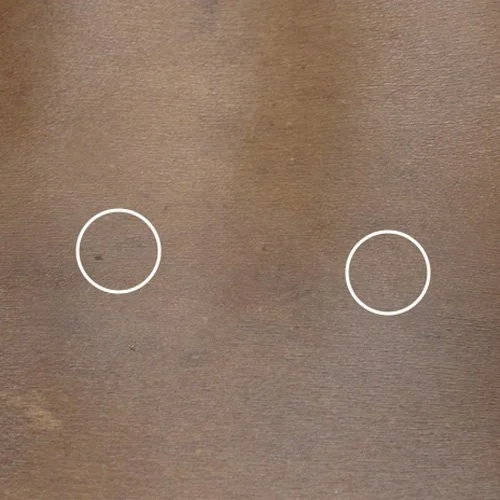
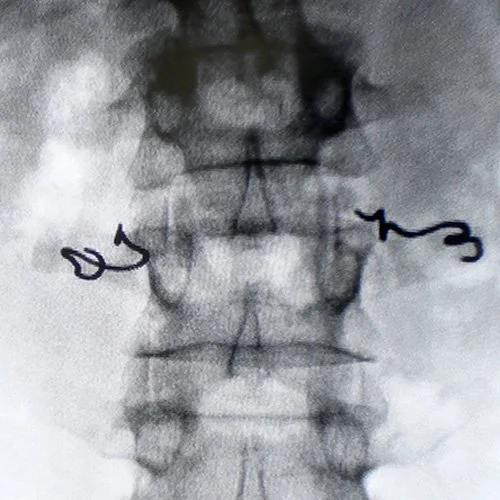
Above: visualization of the worn components, the external pulse generator and stimulation patch, with the Injectrode lead beneath the skin. Below: fluoroscopy and skin of the lower back, one participant, LIFE study (NCT06206356). Bilateral placement; sites circled.
PLACEMENT, THERAPY, REMOVAL
Chronic does not mean permanent.
01 Placement
Performed under local anesthesia with ultrasound or fluoroscopic visualization. The delivery needle is marked so the physician knows which portion of the device is deploying at each stage. The needle is withdrawn and the entire device remains beneath the skin. There is no incision to close. The helical structure is designed to conform to the anatomy and hold position without tines, hooks, or sutures.
02 Therapy
The patient applies the patch electrode, attaches the generator, and uses the system on a schedule established with their clinician. Because there is no exit site to inspect and no connector to service, follow-up is designed around the therapy rather than around the hardware.
03 Removal
The Injectrode lead sits fully implanted, so removal begins by regaining access to the subcutaneous collector through a small opening. From there, the device is grasped and drawn out under gentle traction.
TRUE PNS™ SYSTEM
The System at a glance.
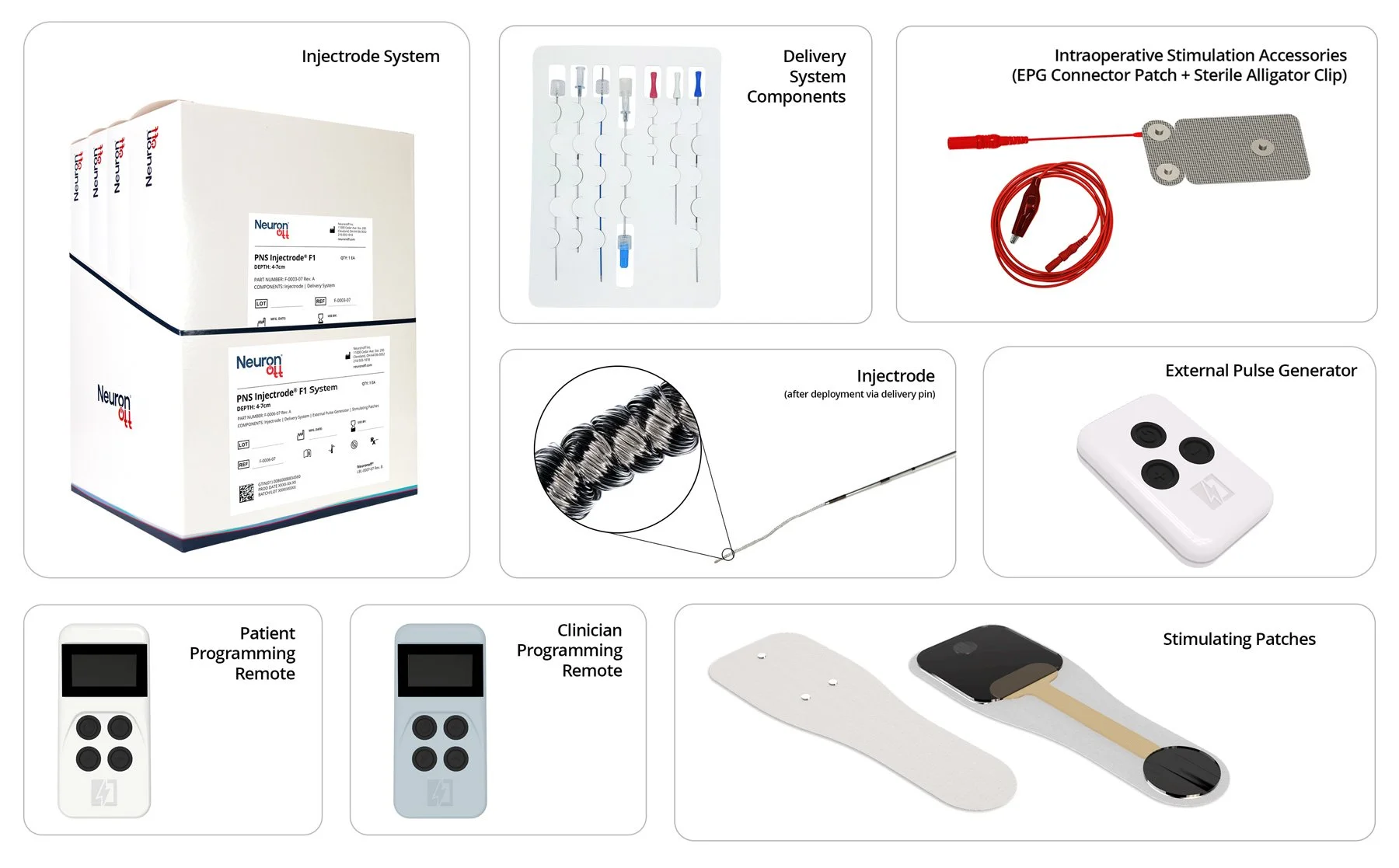
TRUE PNS™ PROCEDURE OVERVIEW
Unboxing and Procedure Overview
CAUTION: INVESTIGATIONAL DEVICE. LIMITED BY FEDERAL (OR UNITED STATES) LAW TO INVESTIGATIONAL USE ONLY. NOT FOR SALE.
THE ENTRY SITE
Placed via 18-gauge needle
An 18 gauge needle is in the same size range used for image guided injections. Placement leaves a 1.27 mm (1/20 inch) entry site rather than an incision, and the intended closure is a skin closure strip. There is nothing to suture.
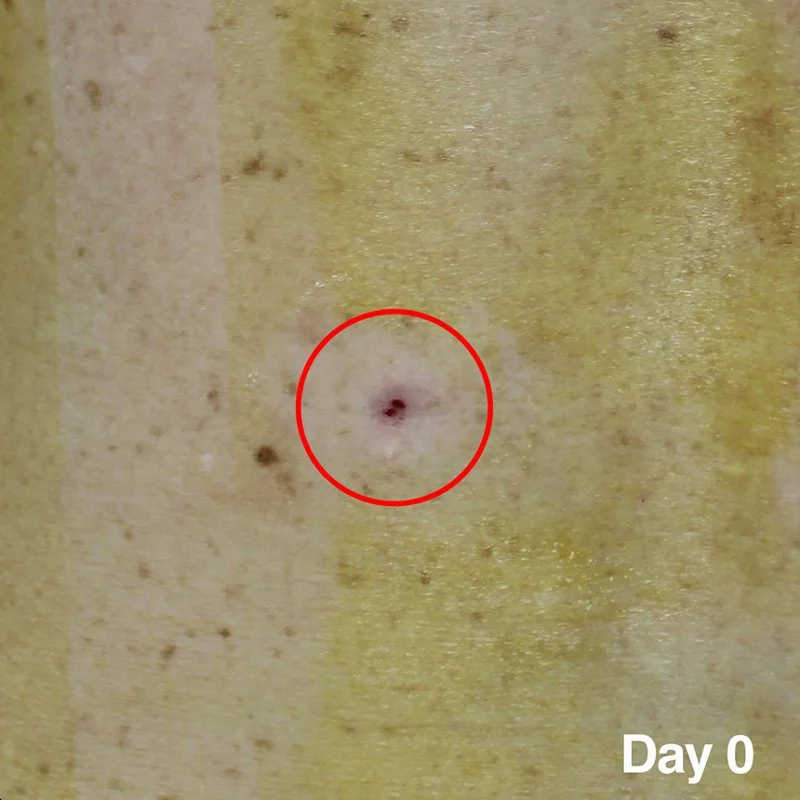
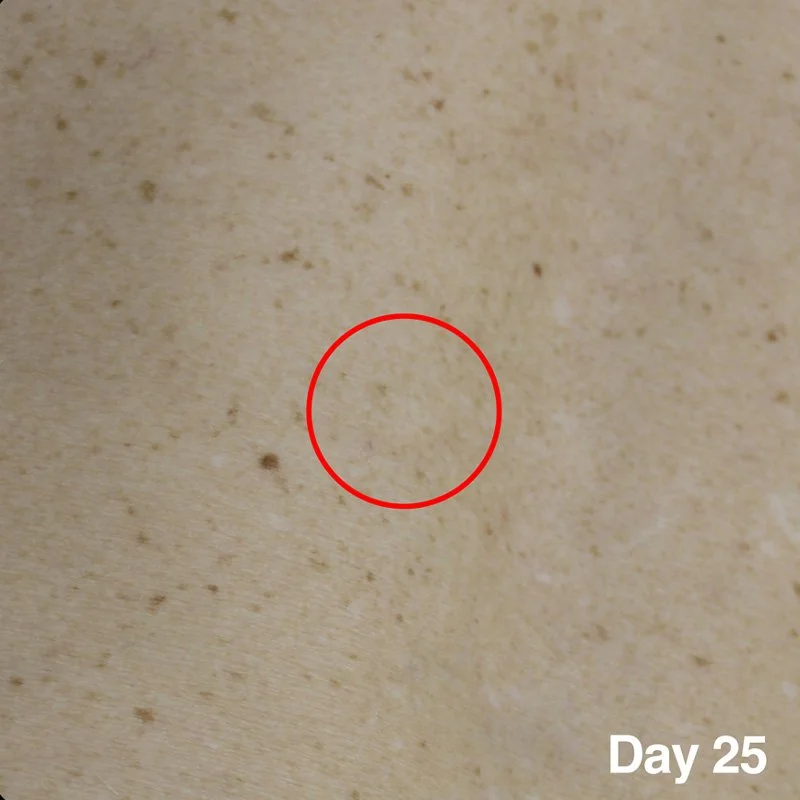
Placement site at day zero and 25 days later. One participant in the LIFE study (NCT06206356), the first in human evaluation of the fully implanted configuration.
VERIFICATION AND VALIDATION
Where the testing stands.
The True PNS configuration is being evaluated through the verification and validation program supporting the 510(k) submission. Some of that work is complete and some is underway. The system is being evaluated for FDA submission with a designed therapy duration of 30 days up to two years.
The LIFE study evaluated use of under 30 days of the Injectrode lead to stimulate peripheral nerves that activate lower back musculature, an approach used in the management of some chronic low back pain. It was conducted in this configuration.
THE PLATFORM
Two configurations, one familiar placement method.
| Specification | True PNS™ | Experience PNS™ |
|---|---|---|
| Development stage | Clinical evaluation | Clinical evaluation |
| Duration | Up to two years | 30 days |
| At the skin | No exit site | Proximal end of the lead remains accessible |
| Power | External pulse generator, through skin | External pulse generator, direct connection |
| Placement | 18 gauge needle, local anesthesia, clinic | 18 gauge needle, local anesthesia, clinic |
| Implanted electronics | None | None |
| Worn components | Generator, patch | Generator, patch |
| End of therapy | Designed for removal whenever chosen, within two years | Lead removed at the end of the course |
CLINICAL PROGRAMS
Where the evidence stands.
FIRST IN HUMAN
The LIFE Study
A first in human safety study conducted in ten healthy participants, with a secondary measure of stimulation delivery rather than pain. Placement targeted the dorsal rami innervation of the erector spinae, the anatomy relevant to the chronic low back pain program. No serious adverse events were reported.
Configuration evaluated
The fully implanted configuration, now True PNS
Population
Ten healthy participants to provide reliable muscle stimulation via peripheral nerve stimulation as an effectiveness measure of future chronic pain treatment interventions.
Status
Complete
Identifier
NCT06206356
RANDOMIZED, SHAM CONTROLLED
The neurogenic bladder study
A double blind randomized study with a sham arm, conducted in adults with neurogenic bladder following spinal cord injury. Funded by the Department of Defense through the Congressionally Directed Medical Research Programs.
Population
Adults with chronic, untreated neurogenic bladder following spinal cord injury
Status
Active, Enrolling
Funder
DOD / CDMRP
Identifier
NCT07264868
Questions about True PNS?
We are glad to talk with clinicians about placement technique and target selection, and with investors and partners about the development path.