
Neuronoff Implants First Patient in DOD-Funded Trial of Injectrode for Neurogenic Bladder in Spinal Cord Injury
Big News!
Neuronoff Implants First Patient in DOD-Funded Trial of Injectrode for Neurogenic Bladder in Spinal Cord Injury Big News!

THE INJECTRODE® PLATFORM
A better way forward.
Patients who suffer from chronic pain deserve a simple treatment option that doesn't involve drugs or invasive surgeries. The Injectrode® lead is designed to deliver nerve stimulation through one small needle placement.
Investigational device. Limited by Federal (or United States) law to investigational use only. Not for sale.
THE PLATFORM
Based on the Injectrode® lead technology, True PNS and Experience PNS differ in how the system is worn and how long therapy lasts. A third system, Link PNS, is in preclinical development.
One foundational technology. Two therapeutic solutions.
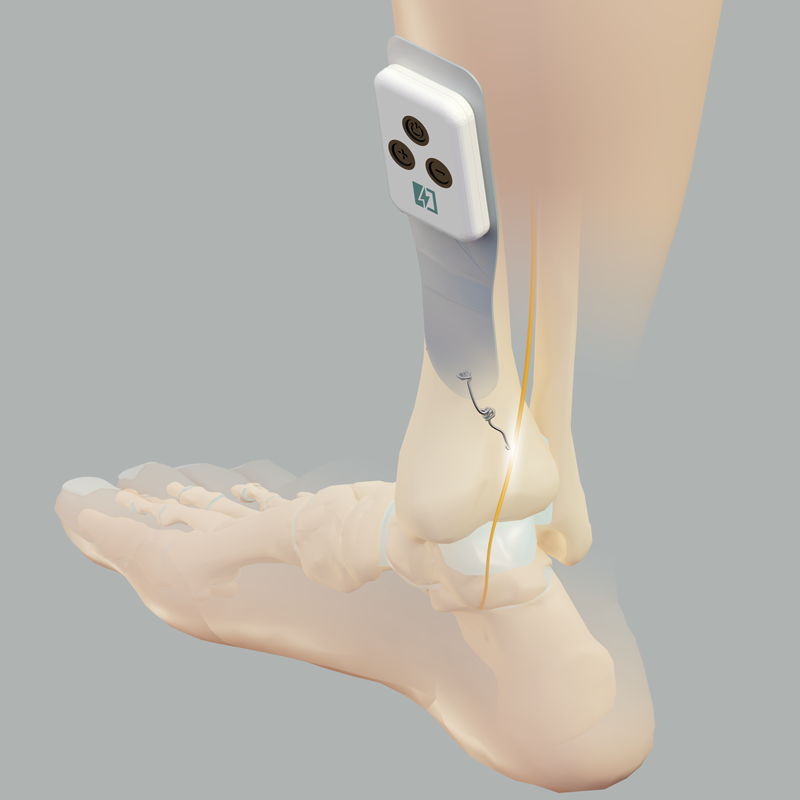
INVESTIGATIONAL - LONG-TERMTrue PNS™
Designed for up to 2 years, entirely beneath the skin
The Injectrode lead sits fully implanted. Nothing stays through the skin. Power and signal reach it from an external pulse generator that attaches magnetically to a patch worn on the surface, directly above the lead.
INVESTIGATIONAL - SHORT-TERMExperience PNS™
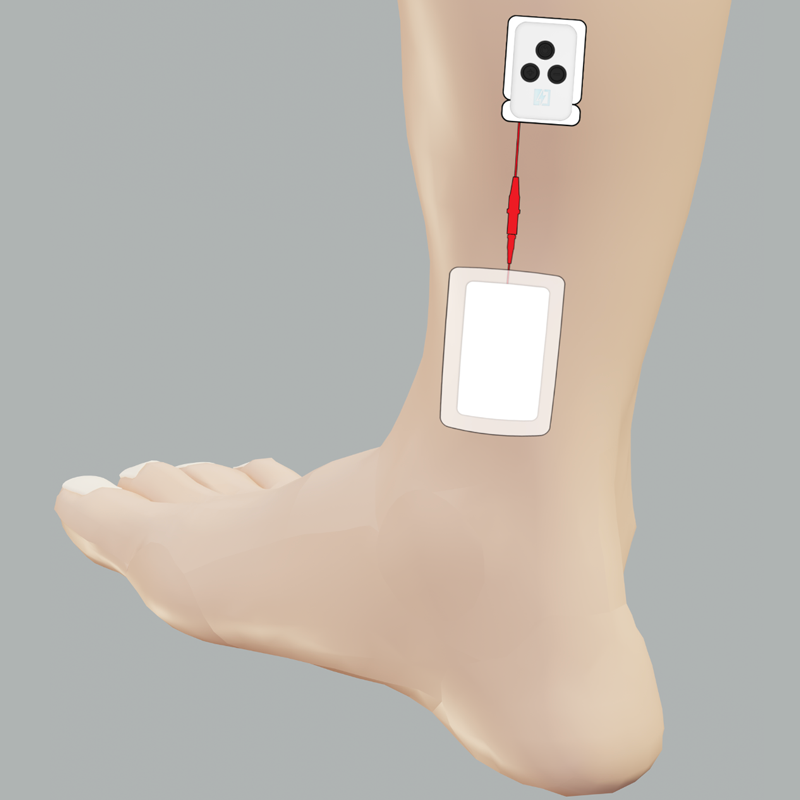
30 days of stimulation therapy.
Placed in a single clinic visit, with one end of the Injectrode lead accessible at the skin and connected to an external pulse generator the patient uses at home. After 30 days, the lead is designed to be removed through the same access point used for placement.
PRECLINICAL - IN DEVELOPMENTLink PNS™
Link PNS is designed to connect the Injectrode lead to implanted pulse generators and receivers, for patients who prefer nothing worn on the skin.
WHY IT MATTERS
A more elegant way to deliver nerve stimulation.

ENTER THE INJECTRODE
A Signal, Not a Substance
Instead of another drug injection, the Injectrode lead is placed through an 18 gauge needle and carries an electrical signal to the nerve. Once placed, it creates a low impedance path for electrical signals from just beneath the skin down to the nerve. Our goal is a drug-free option clinicians can offer earlier, without the surgery that long term stimulation systems have typically required.
Our mission is to lower the barriers to neuromodulation for patients, physicians, providers, and payers by transforming an invasive surgery into an elegant needle-based intervention, making it an earlier choice, not a last resort.

TODAYS STANDARD OF CARE
Drug Injections
The first-in-line therapy for pain management often involves corticosteroid injections, administered through 18 to 23 gauge needles. These injections can offer relief lasting several weeks to months, but their use is generally limited to 2 to 4 times a year because of potential side effects, including tissue weakening and hyperglycemia. When re-treatment intervals are exceeded, clinicians may consider other drugs, radiofrequency ablation, surgery, or neuromodulation.

EXTERNAL STIMULATION
How the Signal Reaches the Nerve
Our external pulse generator (EPG) produces the electrical signals, sometimes called waveforms. In True PNS, the signal passes through the skin to the fully implanted Injectrode lead. In Experience PNS, the EPG connects directly to the end of the lead at the skin. Either way, the lead carries the signal to the nerve, where it is intended to change how pain signals are interpreted. Strength and timing can be adjusted by the EPG under clinician supervision.
Simple to Place. Simple to Remove.
PLACEMENT AND REMOVAL
SIMPLE REMOVAL
With Implants, Saying "Yes" Should Not Mean Saying "Forever"
Agreeing to an implant has meant agreeing to live with it: a generator pocket, a battery with a service life, and a second procedure to remove what the first one placed. Both systems built on the Injectrode lead are placed through a needle and designed to be removed. Experience PNS comes out through the same access point after 30 days. True PNS comes out through a small opening, whenever the patient and clinician choose, within two years.

CLINICAL NEED
There is a Clear Clinical Need
Over 52 million U.S. adults live with chronic pain, with 13 million new cases annually. Most are managed with medication and repeat injections. Peripheral nerve stimulation is an established therapy, but most patients never receive it, in part because long term systems have typically required an operating room, a surgically implanted lead, and a generator in a pocket beneath the skin. The bottleneck is the delivery, not the therapy.
CLINICAL READINESS
Where the evidence stands.
FIRST IN HUMANThe LIFE Study
A first in human safety study conducted in ten healthy participants, with a secondary measure of stimulation delivery rather than pain. Placement targeted the dorsal rami innervation of the erector spinae, the anatomy relevant to the chronic low back pain program. No serious adverse events were reported.
Configuration evaluated
The fully implanted configuration, now True PNS
Population
Ten healthy participants to provide reliable muscle stimulation via peripheral nerve stimulation as an effectiveness measure of future chronic pain treatment interventions.
Status
Complete
Identifier
NCT06206356
RANDOMIZED, SHAM CONTROLLEDThe neurogenic bladder study
A double blind randomized study with a sham arm, conducted in adults with neurogenic bladder following spinal cord injury. Funded by the Department of Defense through the Congressionally Directed Medical Research Programs.
Population
Adults with chronic, untreated neurogenic bladder following spinal cord injury
Status
Active, Enrolling
Funder
DOD / CDMRP
Identifier
NCT07264868